AI Agent Identity Governance: The Enterprise Shift From Access to Accountability
Anil Nair is an enterprise AI strategist focused on AI governance, intelligent automation, agent orchestration, and the architecture required to deploy AI systems safely across complex organizations.

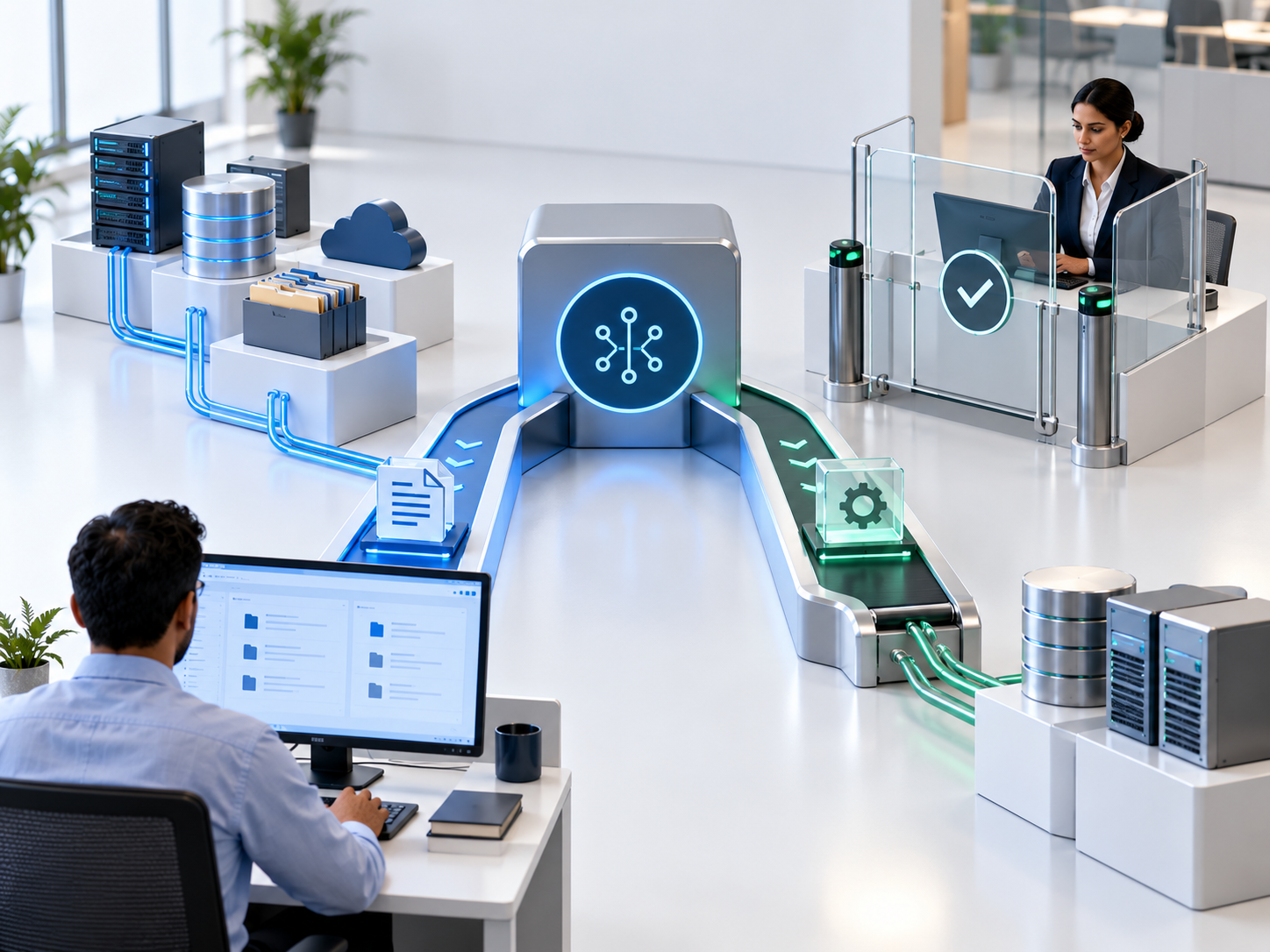
AI agent identity governance is becoming a core enterprise requirement as autonomous agents gain access to business systems and data. Organizations now need to identify agents, define their permissions, assign accountable human sponsors, monitor activity and manage access throughout the agent lifecycle. Gartner and Microsoft developments indicate that identity and access governance are becoming foundational controls for enterprise agent deployment.
What Is AI Agent Identity Governance?
AI agent identity governance is the practice of giving each enterprise AI agent a defined identity, controlled permissions, accountable ownership and managed lifecycle.
As agents move from generating recommendations to taking actions, traditional application access models become insufficient. Microsoft now provides dedicated agent identity capabilities that allow organizations to identify agents, assign sponsors and govern their access across enterprise resources.
The important change is that an AI agent is no longer treated simply as a feature inside an application. It increasingly needs to be treated as a governed nonhuman identity.
Why AI Agent Identity Governance Is Becoming an Enterprise Priority
AI agent identity governance is becoming important because enterprise agents increasingly interact with systems that contain sensitive information and operational authority.
Gartner identifies agent identity, permissions and lifecycle management as one of the key steps for controlling agent sprawl. Gartner also predicts that a Fortune 500 enterprise could have more than 150,000 agents in use by 2028, compared with fewer than 15 in 2025. Only 13 percent of organizations surveyed by Gartner believe they have the right agent governance in place.
Strategic implication: Enterprises cannot manage thousands of agents through informal ownership and manually maintained permissions. Identity, access and lifecycle controls need to become systematic.
Agent Access Is Different From Employee Access
An employee may need access to many systems because their role spans multiple responsibilities. An agent should generally receive access based on its specific purpose.
For example, an agent responsible for preparing a procurement report may need permission to read purchasing information but should not automatically receive permission to modify supplier records.
This creates a fundamental governance principle: agent capability should not automatically determine agent authority.
How Enterprises Should Govern AI Agent Identities

A practical AI agent identity governance model should connect five controls.
1. Establish a Unique Agent Identity
Every production agent should have an identifiable identity rather than operating through a shared employee account.
Microsoft's Entra Agent ID architecture provides dedicated identities for AI agents and enables organizations to manage those identities through established identity governance capabilities. This creates clearer accountability for actions performed by an agent.
2. Assign a Human Sponsor
Every important enterprise agent should have an accountable human owner or sponsor.
Microsoft's current governance model requires a human sponsor for agent identities and provides lifecycle mechanisms when sponsorship changes.
The purpose is not to require humans to approve every agent action. The purpose is to ensure that responsibility for the agent remains clear throughout its lifecycle.
3. Apply Scoped Permissions
Agent permissions should correspond to the agent's defined purpose. A useful model separates:
| Access Area | Governance Approach |
|---|---|
| Data | Define exactly what information the agent can read |
| Systems | Specify which applications the agent can access |
| Actions | Separate read actions from write actions |
| Sensitive operations | Require stronger approval controls |
| Duration | Remove access when it is no longer required |
| Environment | Restrict production access according to risk |
This creates a least privilege model for nonhuman identities.
4. Separate Read Access From Write Authority
Read access and write authority should not be treated as equivalent. A retrieval agent may safely operate with read access to approved information. An agent that can modify financial records, send external communications or change infrastructure requires substantially stronger controls.
Gartner's proposed autonomy levels reflect this distinction. Its highest autonomy level requires continuous monitoring, guardrails, rollback mechanisms and circuit breakers because autonomous actions can occur faster than human oversight.
Strategic implication: Agent governance should increase as both access scope and autonomy increase.
5. Govern the Entire Agent Lifecycle
Identity governance should continue after deployment. Organizations should manage:
- Agent creation
- Identity assignment
- Human sponsorship
- Permission approval
- Production deployment
- Activity monitoring
- Periodic access review
- Permission modification
- Suspension
- Retirement
Gartner specifically recommends defining agent identity, permissions and lifecycle models as part of controlling agent sprawl.
A Risk Based Model for Enterprise Agent Governance
Not every agent needs the same controls. Gartner's 2026 guidance distinguishes agents according to their autonomy and trust boundaries. Observe agents may only read defined information, while autonomous agents can execute actions independently within defined guardrails.
A practical enterprise model can therefore look like this:
| Agent Type | Typical Capability | Governance Requirement |
|---|---|---|
| Observe | Read information | Identity, authentication and logging |
| Advise | Recommend actions | Quality testing and human review |
| Act with approval | Execute approved actions | Approval workflow and audit trail |
| Act autonomously | Execute within guardrails | Continuous monitoring, rollback and circuit breakers |
This proportional approach prevents two common problems. Over controlling low risk agents can make useful automation difficult to deploy. Under controlling autonomous agents can create unacceptable security and operational exposure.
What Changes for Enterprise Architecture
AI agent identity governance also changes how enterprise architects think about agent architecture. The agent itself becomes part of the enterprise control plane.
A mature architecture needs to answer:
- Who is this agent? The identity layer establishes the agent's unique identity and accountable sponsor.
- What can this agent access? The authorization layer defines permitted resources and operations.
- What can this agent do? The policy layer establishes allowed actions and approval requirements.
- What did the agent actually do? The audit layer records actions, approvals and relevant policy decisions.
- What happens when the agent behaves outside its intended scope? The runtime governance layer detects violations and can restrict, suspend or terminate agent activity.
This creates a governance architecture that operates continuously rather than only during initial deployment.
The Emerging Shift From AI Governance to Runtime Governance
The broader enterprise trend is moving from policies that describe acceptable AI behavior toward technical controls that enforce those policies during operation.
Gartner states that AI governance needs to move beyond policies toward continuous monitoring, validation and enforcement. Gartner's 2026 research also identifies agentic AI governance and agentic AI security as emerging capabilities within the broader agentic AI ecosystem.
Strategic implication: The future of enterprise AI governance is increasingly operational. A policy saying that an agent should not access a particular system is useful. A technical control that prevents the agent from accessing that system is governance in practice.
What Enterprise Leaders Should Do Now
Organizations beginning to scale AI agents should establish governance before agent inventories become difficult to control. A practical starting sequence is:
- Inventory existing agents: Identify sanctioned agents, internally developed agents and shadow agents.
- Classify autonomy: Determine whether each agent observes, advises, acts with approval or acts autonomously.
- Create agent identities: Give production agents distinct identities rather than relying on shared human credentials.
- Assign accountable sponsors: Ensure every important agent has a responsible human owner.
- Define least privilege: Give each agent only the data and system access required for its purpose.
- Separate read and write authority: Apply stronger controls to agents capable of modifying enterprise systems.
- Implement runtime monitoring: Track agent actions, policy violations and abnormal behavior.
- Create lifecycle controls: Review, modify, suspend and retire agents as business requirements change.
Conclusion
AI agent identity governance is becoming a foundational requirement for enterprises moving from AI experimentation toward autonomous operations.
The emerging model treats agents as governed nonhuman identities with defined ownership, permissions, lifecycle controls and accountability. Gartner's latest guidance and Microsoft's agent identity capabilities show that identity and access management are becoming central components of enterprise agent governance.
The strategic shift is straightforward: enterprises should not only ask what an AI agent can do. They need to know who the agent is, what it is allowed to access, which actions it can perform and who remains accountable for its behavior.
This connects directly to how enterprises manage AI agent identities and permissions and prevent unauthorized AI agent actions across the broader governance and security architecture.
Frequently Asked Questions
What is AI agent identity governance?
AI agent identity governance manages the identity, ownership, permissions and lifecycle of AI agents operating within an enterprise. It provides accountability and controlled access as agents interact with business systems.
Why do AI agents need separate identities?
Separate identities make agent activity attributable and allow organizations to control permissions independently from individual employees. This supports clearer auditing, access reviews and lifecycle management.
How should enterprises control AI agent permissions?
Enterprises should use least privilege access based on the agent's purpose, separating read access from write authority and applying stronger controls to high risk actions.
Does every AI agent require human oversight?
The level of human oversight should depend on the agent's autonomy and risk. Higher autonomy requires stronger guardrails, monitoring, escalation mechanisms and accountable human ownership.