Enterprise Intelligence Layer: The Architecture Behind Governed Enterprise AI
Anil Nair is an enterprise AI strategist focused on AI governance, intelligent automation, agent orchestration, and the architecture required to deploy AI systems safely across complex organizations.

An Enterprise Intelligence Layer connects enterprise data, business context, AI agents, workflows, governance, and human oversight into a shared operating foundation. Instead of building isolated AI systems that each recreate context and controls, organizations can use an intelligence layer to provide consistent knowledge, permissions, orchestration, observability, and decision support across enterprise AI operations.
What Is an Enterprise Intelligence Layer?
An Enterprise Intelligence Layer is an architectural layer that gives AI systems shared access to enterprise context, knowledge, policies, workflows, and operational signals so they can reason and act consistently across business processes.
The concept is gaining importance as enterprises move from individual AI applications toward networks of AI agents. Microsoft now explicitly describes Microsoft IQ as an enterprise intelligence layer that gives agents a shared understanding of an organization.
An intelligence layer is different from an AI model. A model provides reasoning and generation capabilities. An intelligence layer provides the enterprise context around those capabilities, including business definitions, organizational knowledge, permissions, policies, workflows, tools, and operational information.
This distinction becomes increasingly important when multiple agents operate across the same organization.
Why Enterprise AI Needs an Intelligence Layer
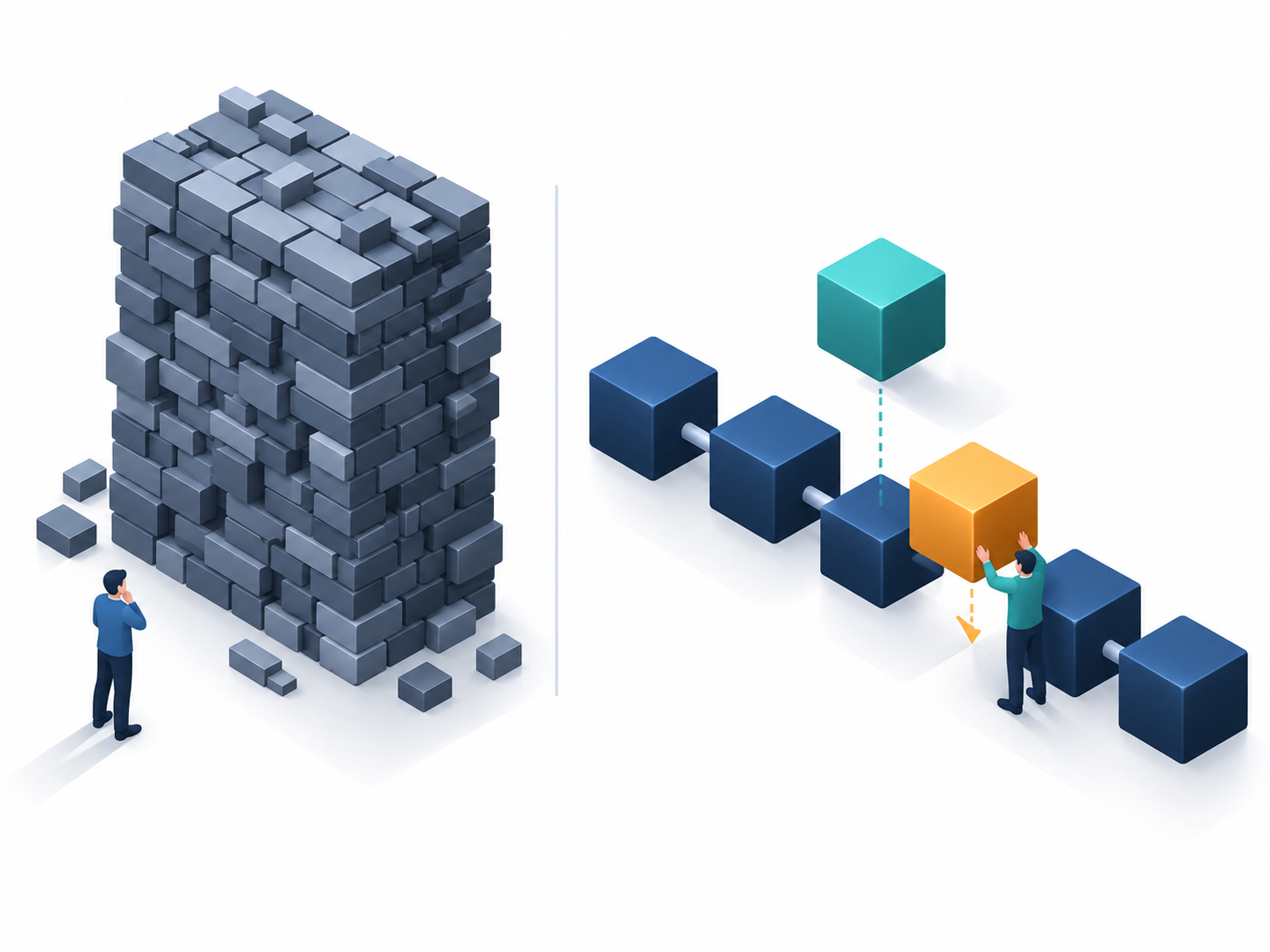
Enterprise AI becomes difficult to scale when every application or agent independently connects to data, knowledge, tools, policies, and business processes.
A shared intelligence layer creates a common foundation that can be reused across AI applications and agents. Microsoft describes this problem through the need for shared enterprise context, noting that organizations can otherwise end up rebuilding the same understanding for each AI project.
Consider an enterprise deploying separate agents for sales, procurement, customer service, finance, and employee operations. Without a shared intelligence foundation, each agent may develop its own understanding of customers, policies, terminology, permissions, and workflows.
With an intelligence layer, those agents can work from common enterprise definitions and controls. This creates consistency while allowing individual agents to specialize in particular business functions.
How an Enterprise Intelligence Layer Works
An Enterprise Intelligence Layer sits between enterprise systems and AI applications, providing the context and controls required for agents to operate within organizational boundaries.
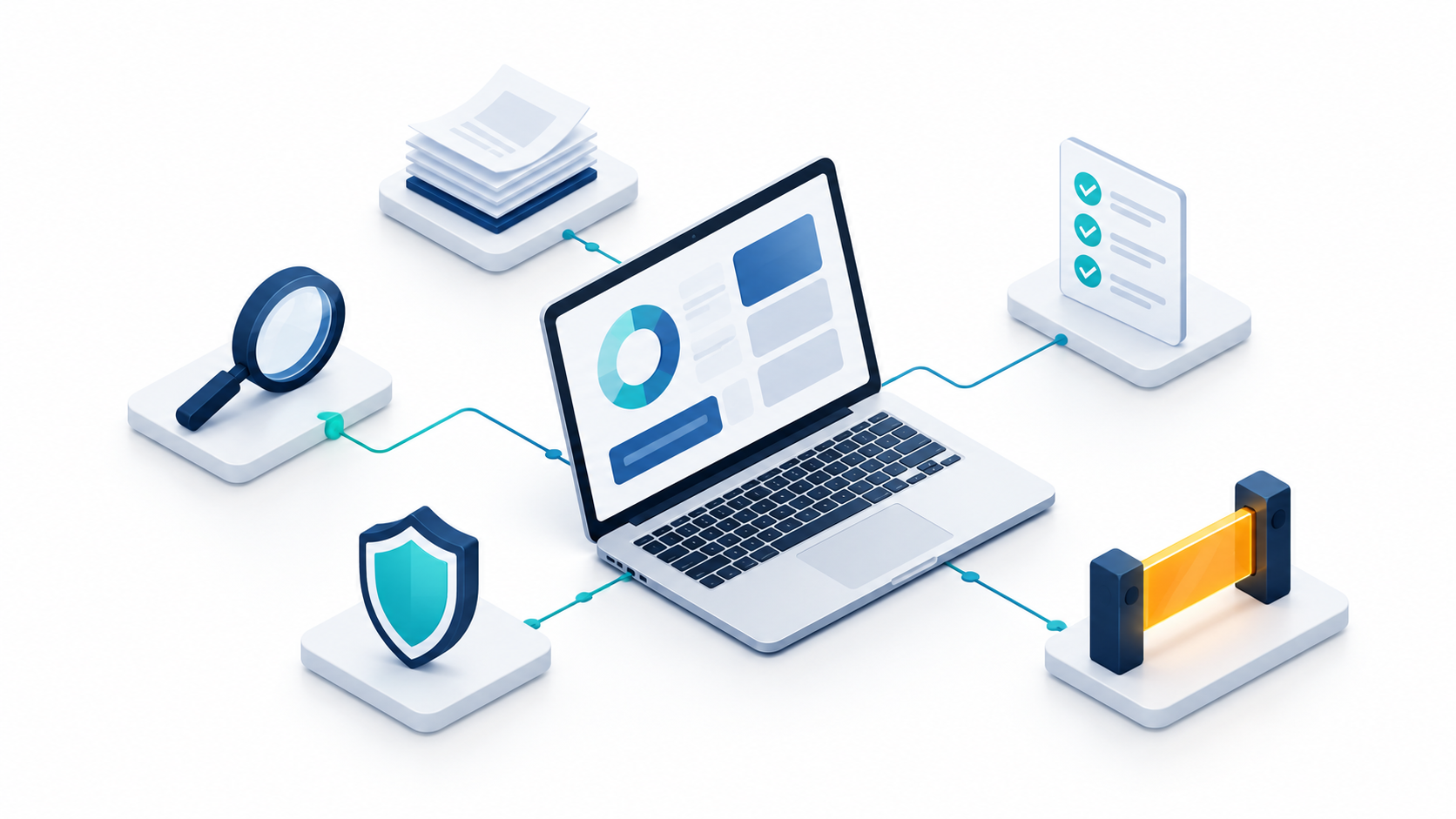
A practical architecture can be understood through six major capabilities.

Enterprise Context and Knowledge
Enterprise context gives AI systems an understanding of how the organization actually operates. This includes business entities, policies, documents, relationships, processes, metrics, operational data, and organizational knowledge.
Microsoft describes Fabric IQ as a mechanism for grounding AI in business entities and data so people and agents can reason using business concepts rather than raw data alone.
The important distinction is that enterprise intelligence is not simply a large collection of documents. The system needs to understand relationships between information and the business processes in which that information is used.
AI Agent Orchestration
Enterprise AI orchestration coordinates how multiple agents, tools, applications, and humans participate in a business process.
An enterprise intelligence layer can determine which agent should perform a task, what information it can access, which tools it can use, and when another agent or human should become involved.
AWS describes enterprise agent architectures in which agents interact with models, tools, knowledge bases, memory, and other agents while security and observability span the architecture.
This becomes particularly important when a business process contains several dependent decisions.
Governance and Policy Controls
AI agent governance determines what agents are permitted to do. Policies can define which systems an agent can access, which actions require approval, what information can be exposed, and which decisions must remain under human oversight.
Governance therefore needs to operate during execution rather than only during model development. Enterprise AI governance increasingly requires controls around boundaries, delegation, runtime behavior, evidence, and operational exposure.
Security and Access Control
An agent should not automatically receive unrestricted access simply because it can technically connect to a system. The intelligence layer should enforce identity, permissions, data access rules, and least privilege principles.
AWS identifies authorization for tools and role based access control for enterprise knowledge as important components of enterprise agent architectures. This allows an enterprise to establish clear boundaries around what an agent can see and what it can do.
Observability and Auditability
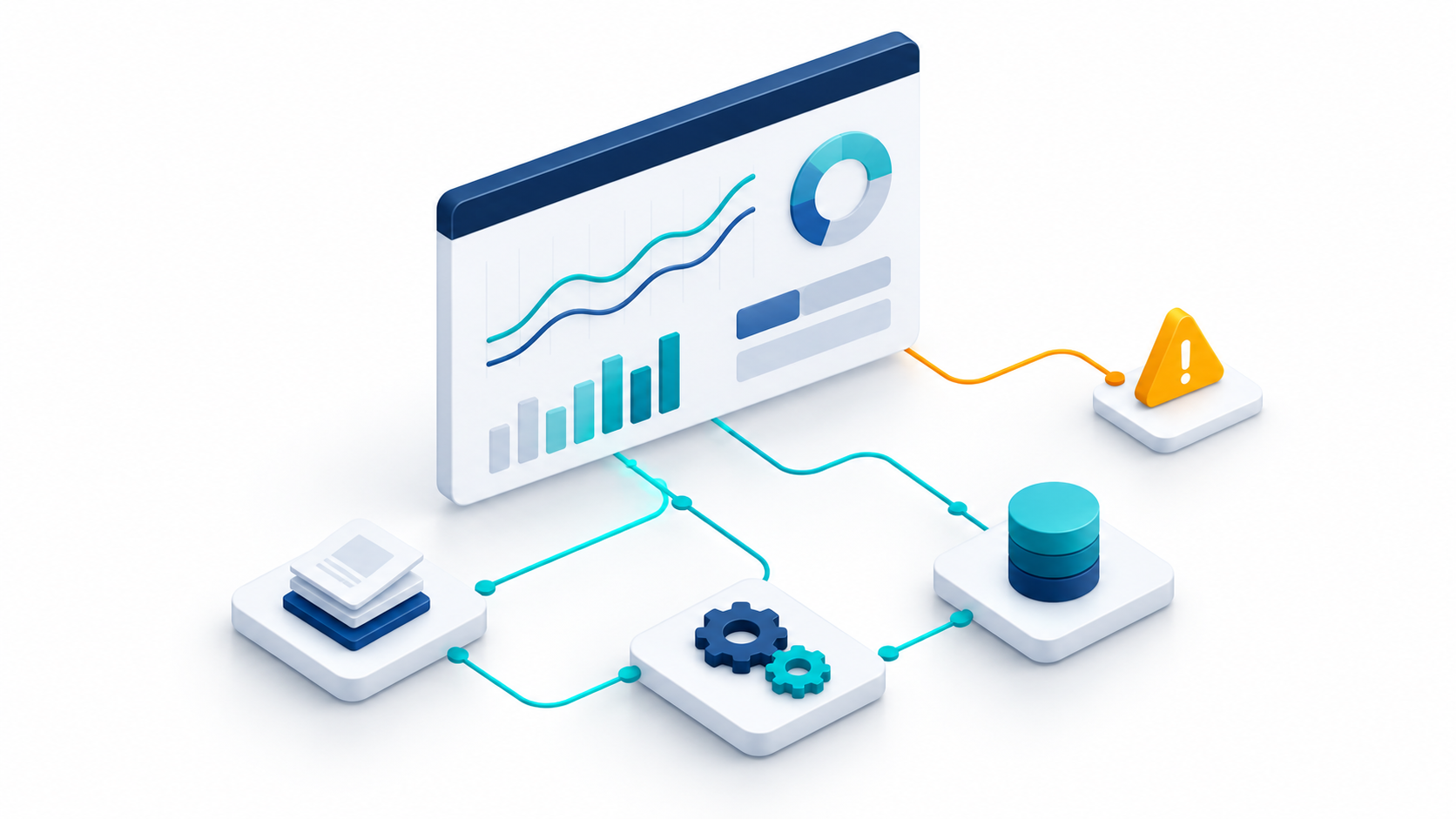
Enterprise AI systems need visibility into what agents are doing, which information they used, what tools they invoked, and how decisions were reached.
Observability allows organizations to investigate failures, evaluate performance, identify unusual behavior, and establish accountability. This is especially important when multiple agents participate in the same workflow because the resulting action may depend on several individual decisions.
Human Oversight
Human in the loop AI agents provide a control point for decisions that require judgment, authorization, exception handling, or accountability.
The objective is not to insert humans into every AI action. Instead, enterprises should define where human judgment creates the most value and where approval should be mandatory.
This creates a controlled operating model in which agents can handle appropriate tasks while people retain authority over consequential decisions.
Enterprise Intelligence Layer vs AI Models and AI Agents
An Enterprise Intelligence Layer should not be confused with either an AI model or an AI agent.
| Component | Primary role | Enterprise responsibility |
|---|---|---|
| AI model | Generates reasoning, predictions, or content | Provides intelligence capabilities |
| AI agent | Performs a defined task using models, tools, and context | Executes work within assigned boundaries |
| Enterprise Intelligence Layer | Connects context, knowledge, policies, agents, tools, and governance | Provides the shared operating foundation |
| Enterprise systems | Store data and execute business transactions | Provide authoritative business capabilities |
| Human oversight | Handles judgment, approvals, and exceptions | Maintains accountability and control |
The intelligence layer therefore acts as connective infrastructure. It does not replace models, agents, or enterprise applications. It coordinates them within a common enterprise framework.

Enterprise Intelligence Layer for AI Agents
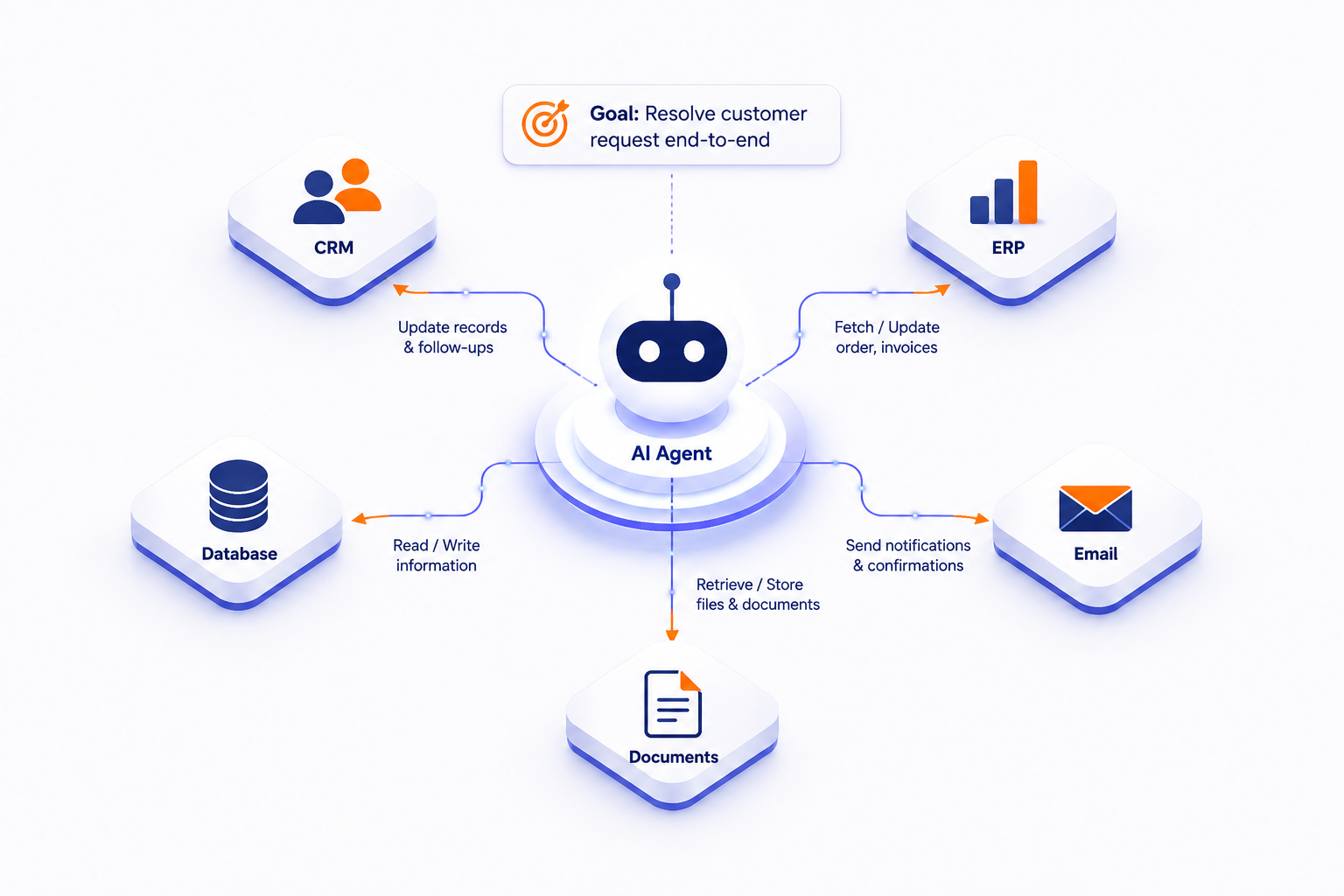
An Enterprise Intelligence Layer becomes especially valuable when organizations move from individual agents to multiple agents operating across connected workflows.
A customer service agent may need information from CRM systems. A finance agent may need transaction and billing information. A procurement agent may need supplier records and purchasing policies. An operations agent may need inventory, logistics, and production information.
These agents may have different responsibilities, but they still operate within the same enterprise. A shared intelligence layer can provide common business definitions, permissions, policies, knowledge, and operational context while allowing each agent to specialize.
Microsoft describes this shared intelligence model as allowing agents to inherit a continuously updated understanding of the organization rather than recreating enterprise context for every agent.
What Should an Enterprise Intelligence Layer Contain?
A mature architecture should address several interconnected capabilities.
- Shared Enterprise Knowledge: Authoritative information from documents, databases, applications, knowledge repositories, and operational systems.
- Business Semantics: Common definitions for customers, products, revenue, risk, processes, roles, and other business concepts.
- Agent Registry: A structured understanding of which agents exist, what they do, what capabilities they have, and where they can operate.
- Tool Access: Controlled access to enterprise applications, APIs, databases, and operational systems.
- Policy Enforcement: Rules governing access, actions, approvals, compliance, and acceptable agent behavior.
- Orchestration: Coordination between agents, applications, workflows, and human participants.
- Observability: Visibility into agent activity, decisions, tool usage, outcomes, exceptions, and performance.
- Human Control: Defined approval points and escalation mechanisms for decisions that require human judgment.
Together, these capabilities transform a collection of independent AI applications into a more coherent enterprise AI operating environment.
How to Build an Enterprise Intelligence Layer
Organizations should build the intelligence layer around business processes rather than starting with individual AI models.
- Step 1: Map enterprise systems and knowledge. Identify the authoritative systems, data sources, documents, processes, and business definitions that AI systems need.
- Step 2: Define enterprise context. Create shared definitions for important business entities, relationships, policies, metrics, and processes.
- Step 3: Establish agent boundaries. Define what each agent is responsible for and which systems, information, and tools it can access.
- Step 4: Implement policy controls. Establish authorization, approval requirements, data access rules, and operational constraints before agents begin executing sensitive actions.
- Step 5: Introduce orchestration. Connect agents, tools, workflows, and people so that complex processes can be coordinated rather than handled by isolated agents.
- Step 6: Add observability. Capture the information required to understand agent activity, decisions, exceptions, and outcomes.
- Step 7: Establish human oversight. Identify decisions that require human approval and create explicit escalation paths.
- Step 8: Continuously evaluate the system. Monitor both individual agent performance and the quality of the overall business process.
This approach creates an architecture that can evolve as new agents, models, applications, and workflows are introduced.
Why the Intelligence Layer Matters for Autonomous Enterprise Operations
The transition from AI assistants to autonomous operations changes the architectural requirements of enterprise AI.
An assistant generally responds to an individual request. An agent can perform a sequence of actions. A network of agents can participate in an entire business process.
As the level of operational responsibility increases, enterprises need stronger mechanisms for shared context, coordination, permissions, governance, observability, and human control.
Current enterprise architecture guidance from AWS and Microsoft reflects this broader shift toward layered agent systems with governance, security, knowledge, orchestration, and observability built into the architecture.
The intelligence layer is therefore becoming an important architectural concept for organizations that want AI systems to operate consistently across the enterprise.
Conclusion
An Enterprise Intelligence Layer provides the foundation for connecting enterprise knowledge, business context, AI agents, workflows, governance, security, and human oversight.
The value does not come from adding another AI model. It comes from creating a shared operating foundation that allows different AI systems to understand the organization, operate within defined boundaries, coordinate with one another, and remain observable and governable.
As enterprises move toward increasingly agent based operations, this architectural layer can become the connective tissue between AI capabilities and real business processes.
Frequently Asked Questions
What is an Enterprise Intelligence Layer?
An Enterprise Intelligence Layer is an architectural layer that provides AI systems with shared enterprise context, knowledge, policies, tools, workflows, governance, and operational information.
How is an Enterprise Intelligence Layer different from an AI agent?
An AI agent performs tasks using models, tools, and context. An Enterprise Intelligence Layer provides the shared context, controls, orchestration, and governance that allow multiple agents to operate consistently across an organization.
Why do AI agents need an intelligence layer?
Agents need reliable business context, controlled access to enterprise systems, clear policies, and coordination mechanisms to operate safely across complex business processes.
Does an Enterprise Intelligence Layer replace AI models?
No. The intelligence layer works alongside AI models, agents, enterprise applications, data systems, and human participants. Its purpose is to connect and govern these capabilities within an enterprise architecture.