AI Agent Observability: How Enterprises Monitor AI Agents in Production
Anil Nair is an enterprise AI strategist focused on AI governance, intelligent automation, agent orchestration and the architecture required to deploy AI systems safely across complex organizations.
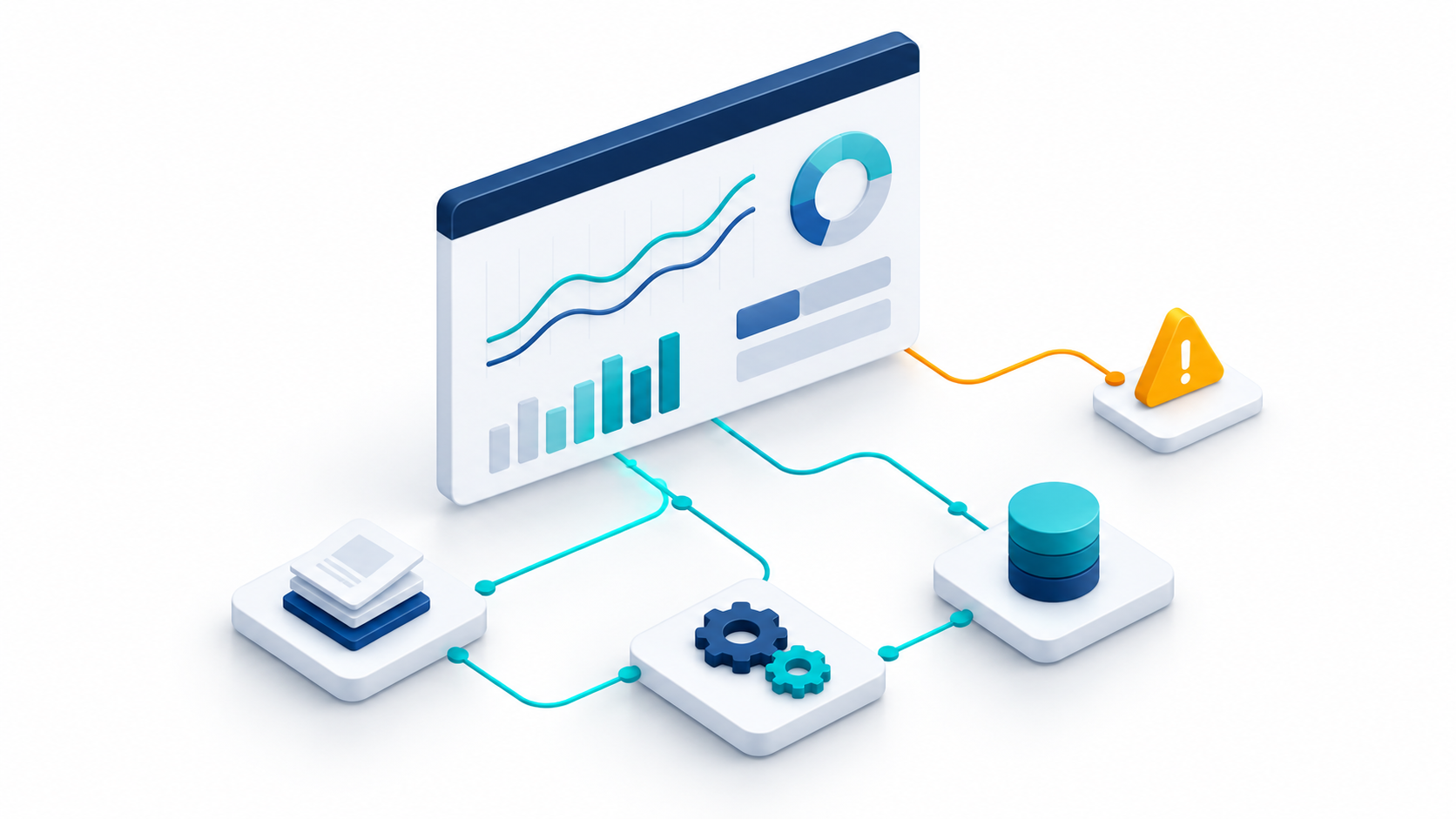
AI agent observability answers a question that traditional monitoring cannot: is the agent still doing the right thing. Uptime dashboards show that a service responded, while an agent can respond perfectly and quietly make the wrong decision hundreds of times.
The difference shows up in how failures appear. A retailer's returns agent that starts approving refunds outside policy will not trigger a single error alert, because nothing technically failed.
What Is AI Agent Observability?
AI agent observability is the collection and analysis of records that show what an agent did, which tools and data it used and on whose authority. It covers behavior over complete tasks rather than the health of the underlying software.
Three kinds of monitoring are often confused and enterprises usually need all three. Each answers a different question and reaches a different team.
| Type | Question it answers | Typical owner |
|---|---|---|
| Application monitoring | Is the system running and responding | Platform engineering |
| LLM observability | What did the model receive and return on each call | AI engineering |
| AI agent observability | Did the agent complete the task correctly, within policy, at acceptable cost | Business and risk owners |
LLM observability looks at single calls, so it catches a bad response. Agent observability follows the whole sequence of steps, which is where enterprise failures actually happen.
What to Monitor in Production
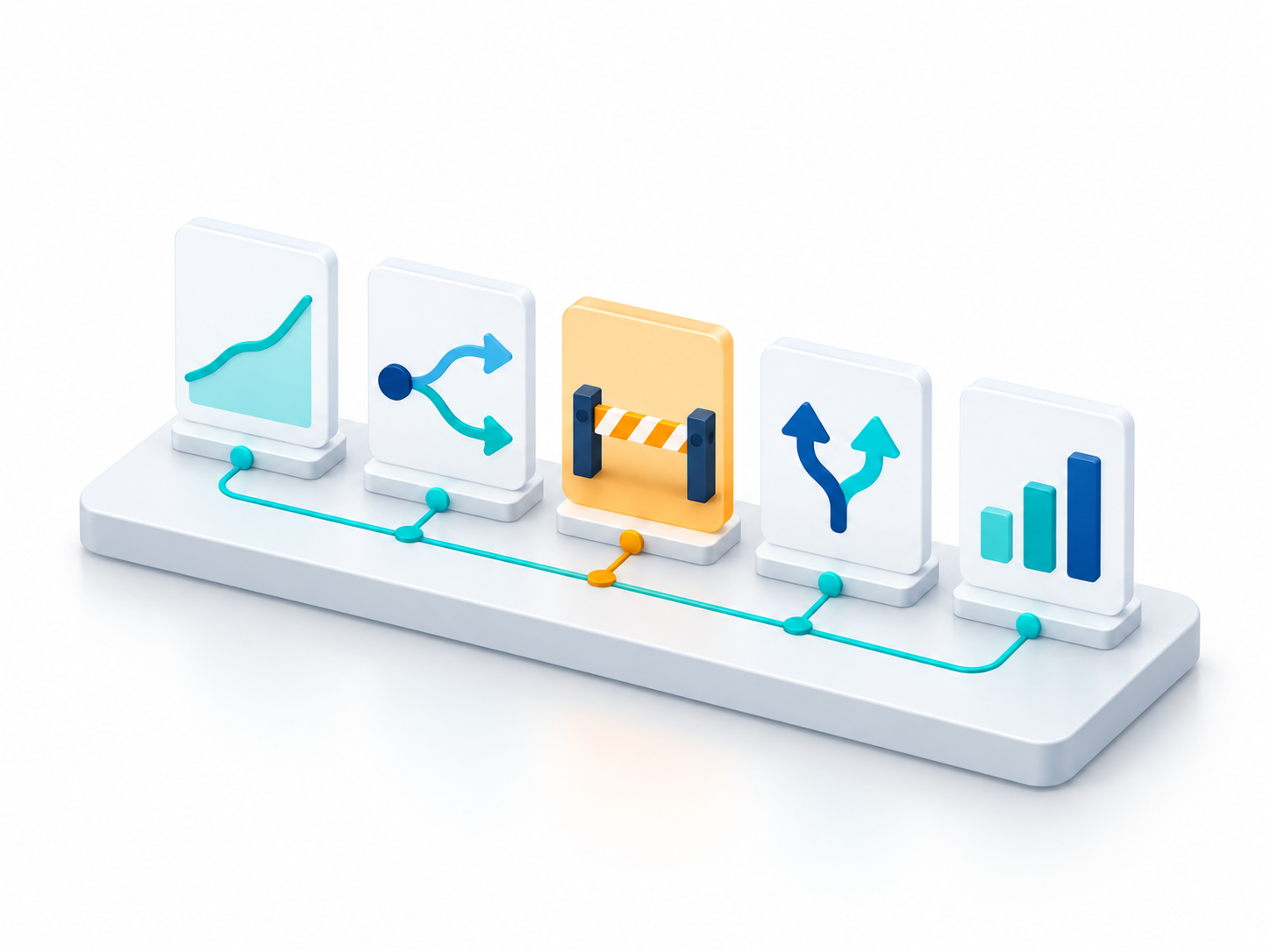
Effective AI agent monitoring covers five signal groups, each tied to a decision someone has to make. Tracking traces alone produces volume without answers.
Task Outcomes and Accuracy Drift
Outcome monitoring compares completed work against the accuracy the agent achieved in testing. A pharmaceutical batch record agent that fell from its tested accuracy has drifted and the cause is usually a change in documents or process rather than the agent itself.
Trajectory and Tool Calls
A trajectory record captures every step an agent took: which tools it called, what data it read and in what order. This is what makes a wrong outcome explainable and it needs an agent identity attached to every call, not a shared service account.
Policy and Permission Events
Permission events are attempts to act outside granted scope, including blocked writes and requests for data the agent may not read. A rising count usually means the agent's task has changed since its permissions were set, which is a signal to review scope rather than to widen it.
Escalation and Approval Signals
Escalation monitoring tracks how often the agent routes work to a person, how long approvals take and how often approvers override the agent's proposal. A climbing override rate is an early warning that the rules behind the agent no longer match how the business operates and those approvals are also the feedback described in human in the loop AI.
Cost and Latency
Cost monitoring tracks spend and time per completed task, not per model call. A procurement sourcing agent whose cost per task doubles after a model change is a finance problem long before it becomes a technical one.
How to Set Up AI Agent Observability
Setting up observability is an operating decision as much as a technical one, because signals without owners do not produce action. Six steps cover a working setup.
- Instrument every action, not just model calls. Each tool call, data read and write attempt is recorded with the agent's own identity and a trace that links the steps of one task.
- Use open standards for the records. The OpenTelemetry project has been extending its semantic conventions to cover AI agents, which keeps your records portable across tools rather than locked into one vendor's format.
- Set baselines from the evaluation results. The accuracy, escalation and cost thresholds agreed during AI agent evaluation become the production baselines, so monitoring measures against something specific.
- Define alerts on behavior, not only errors. Microsoft's guidance on agent observability makes the same point: continuous evaluation of agent quality in production matters as much as infrastructure alerts.
- Route every alert to the agent's named owner. Alerts that land in a shared channel get ignored, so each one goes to the person accountable for that agent under AI agent governance.
- Hold a standing review. Operations reviews the signals weekly, and governance reviews accuracy, escalation trends and incidents on a longer cycle.
Turning Signals Into Action
Observability earns its cost when each signal has a defined response. Without that, teams accumulate dashboards nobody opens.
| Signal | What it usually means | Response |
|---|---|---|
| Accuracy drift | Inputs or process changed | Re-run the evaluation test set |
| Rising escalations | Rules no longer match reality | Fix the rule, then re-test |
| Blocked write attempts | Scope no longer matches the task | Review permissions and task design |
| Rising override rate | Agent's judgment diverging from approvers | Add corrected cases to the test set |
| Cost per task climbing | Model or routing change | Check routing before widening budget |
Narrowing an agent's permissions or pausing it is a valid response, and it should be as easy to do as widening them.
Observability as Audit Evidence
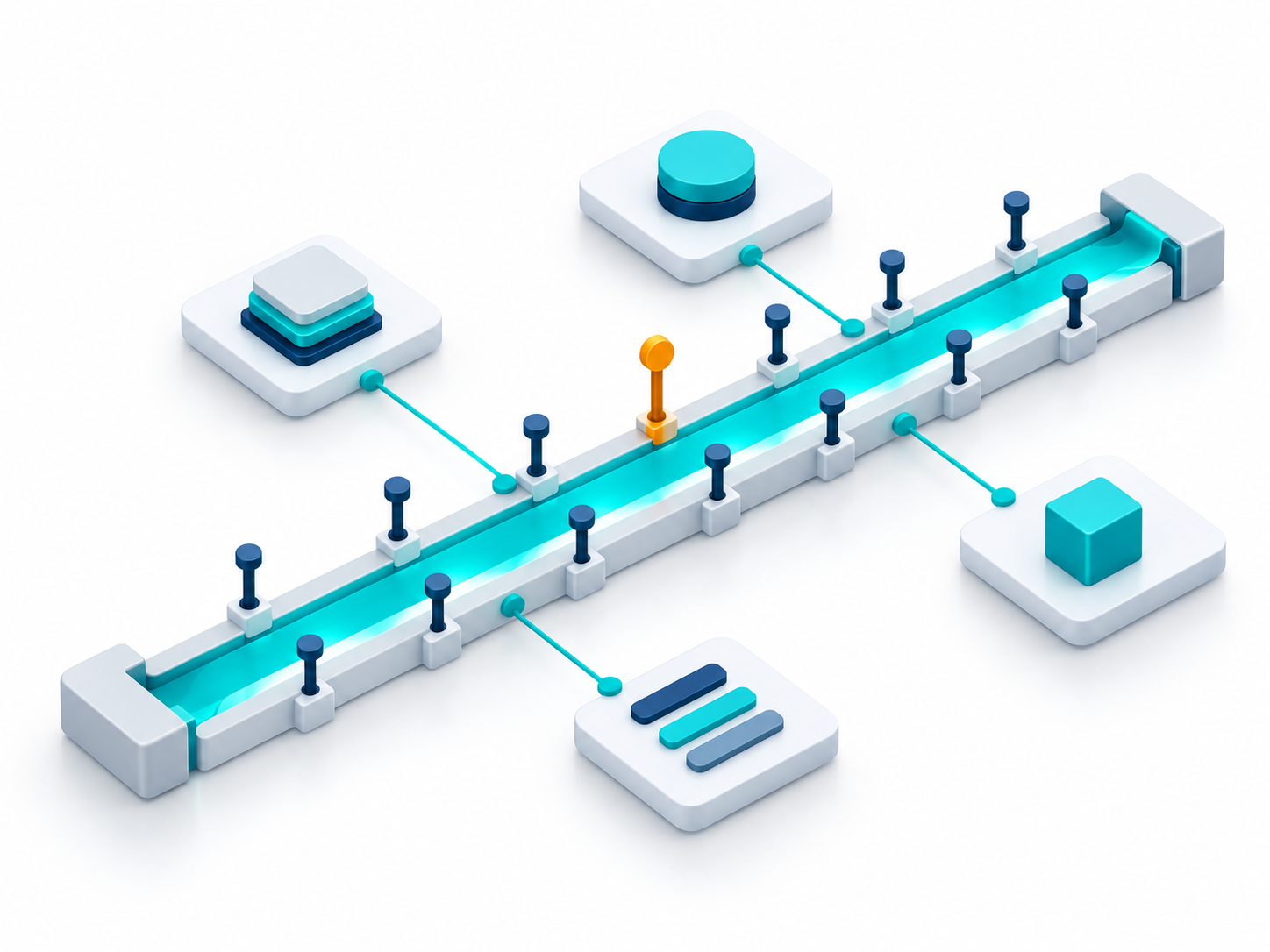
Audit evidence is the record that shows who or what took an action, on what authority and with what result. Regulators and internal audits ask for this at the level of individual actions, not summary reports.
In the AIQoD platform, each agent's Dynamic Twin carries its identity, permissions, decision history and confidence, so the record of an action and the authority behind it stay together. Whatever the tooling, the working test is simple: pick any action from last month and reconstruct why it happened and who allowed it.
Conclusion
AI agent observability turns production behavior into signals a business can act on. Outcomes, trajectories, permission events, escalations and cost each answer a different question and each belongs to someone by name.
Evaluation proves an agent is ready before launch, and observability shows whether that still holds a month later. Together they let an organization widen an agent's autonomy on evidence rather than assumption, inside the Operate stage of AI agent lifecycle management.
Frequently Asked Questions
What is AI agent observability?
AI agent observability is the recording and review of what AI agents do in production, including task outcomes, tool calls, permission events, escalations and cost. It differs from uptime monitoring because an agent can run perfectly and still make wrong decisions.
How is AI agent observability different from LLM observability?
LLM observability focuses on individual model calls, capturing prompts, responses, tokens and latency. Agent observability follows the full sequence of steps an agent takes across a task, including the tools it called and the actions it attempted.
What metrics should enterprises monitor for AI agents?
The core metrics are task outcome accuracy against the tested baseline, trajectory and tool call correctness, blocked or out of scope permission attempts, escalation and override rates and cost and latency per completed task. Each metric should have a threshold and a named owner who acts when it moves.
What is AgentOps?
AgentOps is the operational practice of running AI agents in production, covering deployment, versioning, monitoring, incident response and retirement. Observability supplies the signals that AgentOps decisions are based on.