Maintaining AI Generated Code in the Enterprise: The Hidden Cost of Fast Builds
Anil Nair is an enterprise AI strategist focused on AI governance, intelligent automation, agent orchestration and enterprise architecture.
Maintaining AI generated code in the enterprise is where the real work begins once the demo works. AI can turn a requirement into a working application far faster than traditional development in many situations. Getting a first version to run is not the same as being able to maintain it for years.
I discussed this with Geetanjali Gera, CEO and Founder of AI Ascend Partners, on The Ascend Podcast. This article builds on that conversation and looks at what enterprise teams need to keep AI enabled solutions maintainable after the initial build.
Why Maintaining AI Generated Code in the Enterprise Starts After Launch
The hardest part of AI generated software is ownership after launch, not the first build. When a business rule changes, someone has to understand the impact. When a defect appears, the team has to trace it to the right component, and every release must be tested, approved, reversible and explainable to an auditor.
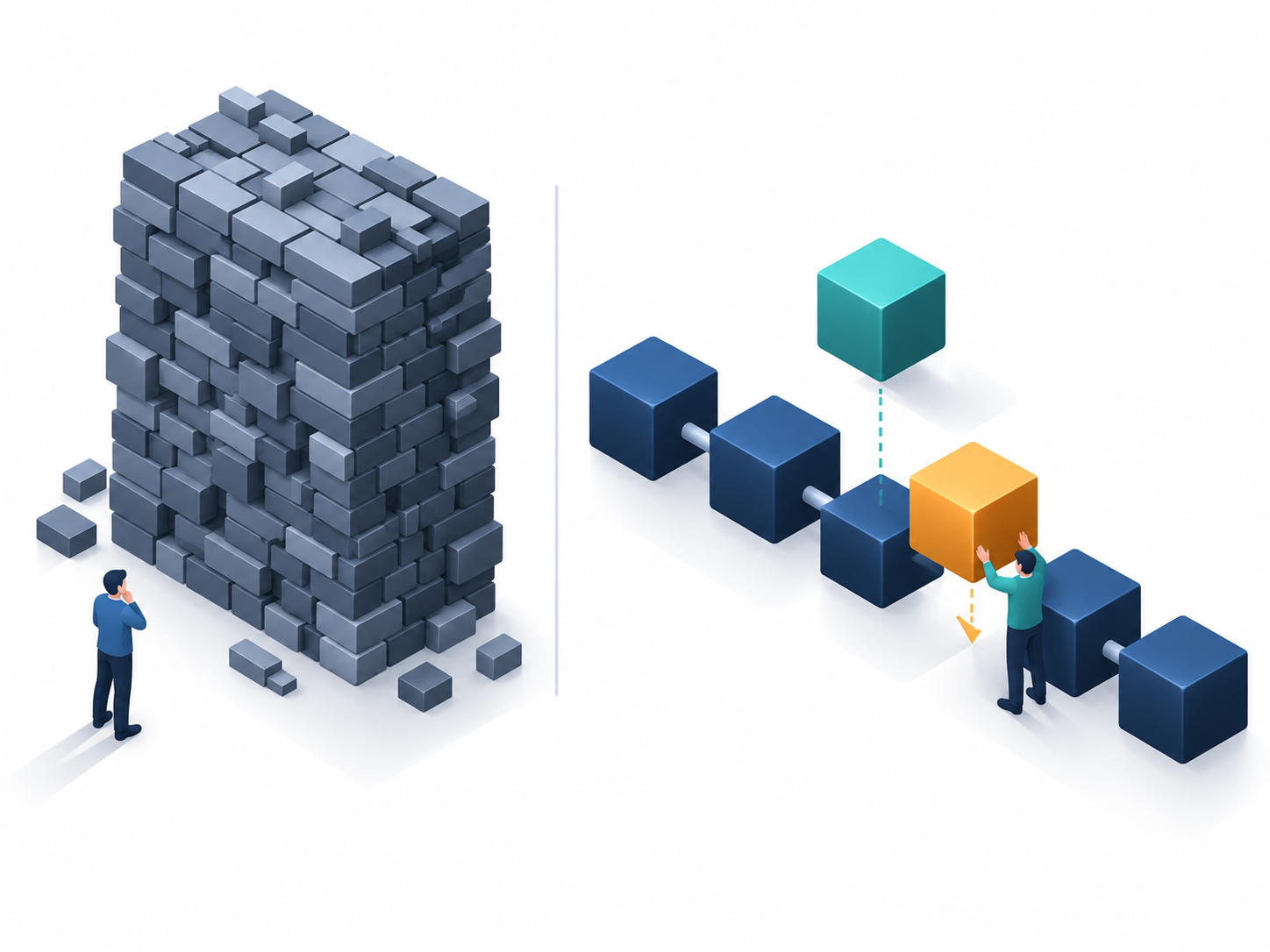
Consider an AI generated application that grows to 40,000 lines of code, a figure used here as an illustration. The real issue is not the line count or whether AI wrote the code. It is whether the system has clear structure, traceable dependencies, tests, documentation and accountable ownership.
Watch the Full Episode
The Ascend Podcast features founders and enterprise leaders putting AI to work. Our conversation covers the move from RPA to agentic AI, a government eVisa delivery, and where people still need to remain in control.
Key Moments
These timestamps mark the parts of the conversation most relevant to enterprise architects and IT leaders.
- 06:37 — Government eVisa delivery and the delivery timeline
- 11:00 — The shift from chatbots and copilots toward coordinated agent networks
- 12:14 — The maintenance challenge illustrated by 40,000 lines of generated code
- 14:05 — Breaking a solution into step based flows
- 15:07 — Dashboards and a virtual assistant for agents in production
- 19:19 — Reviewing agent output before it moves forward
How Enterprise Change Management Is Meant to Work
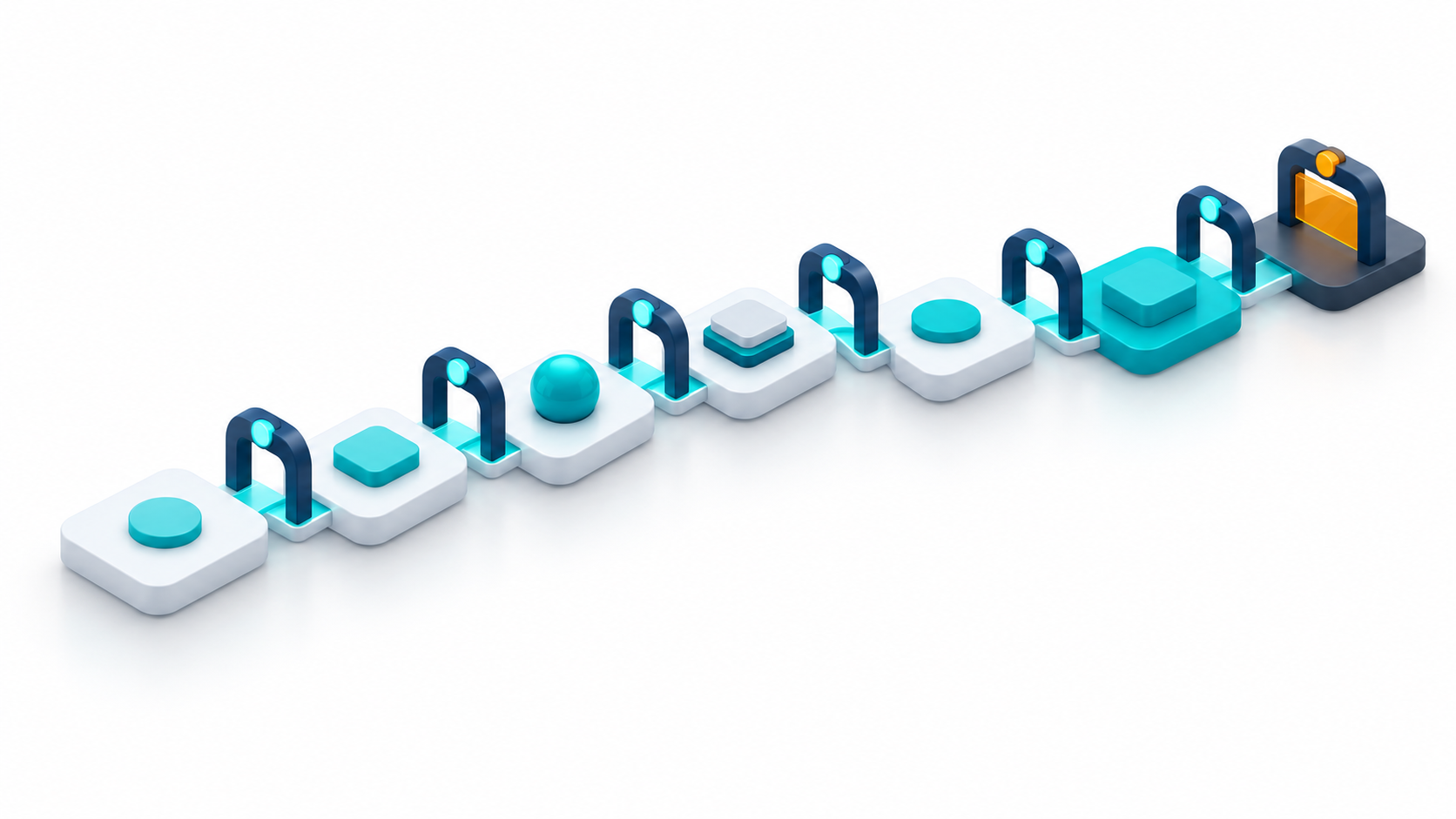
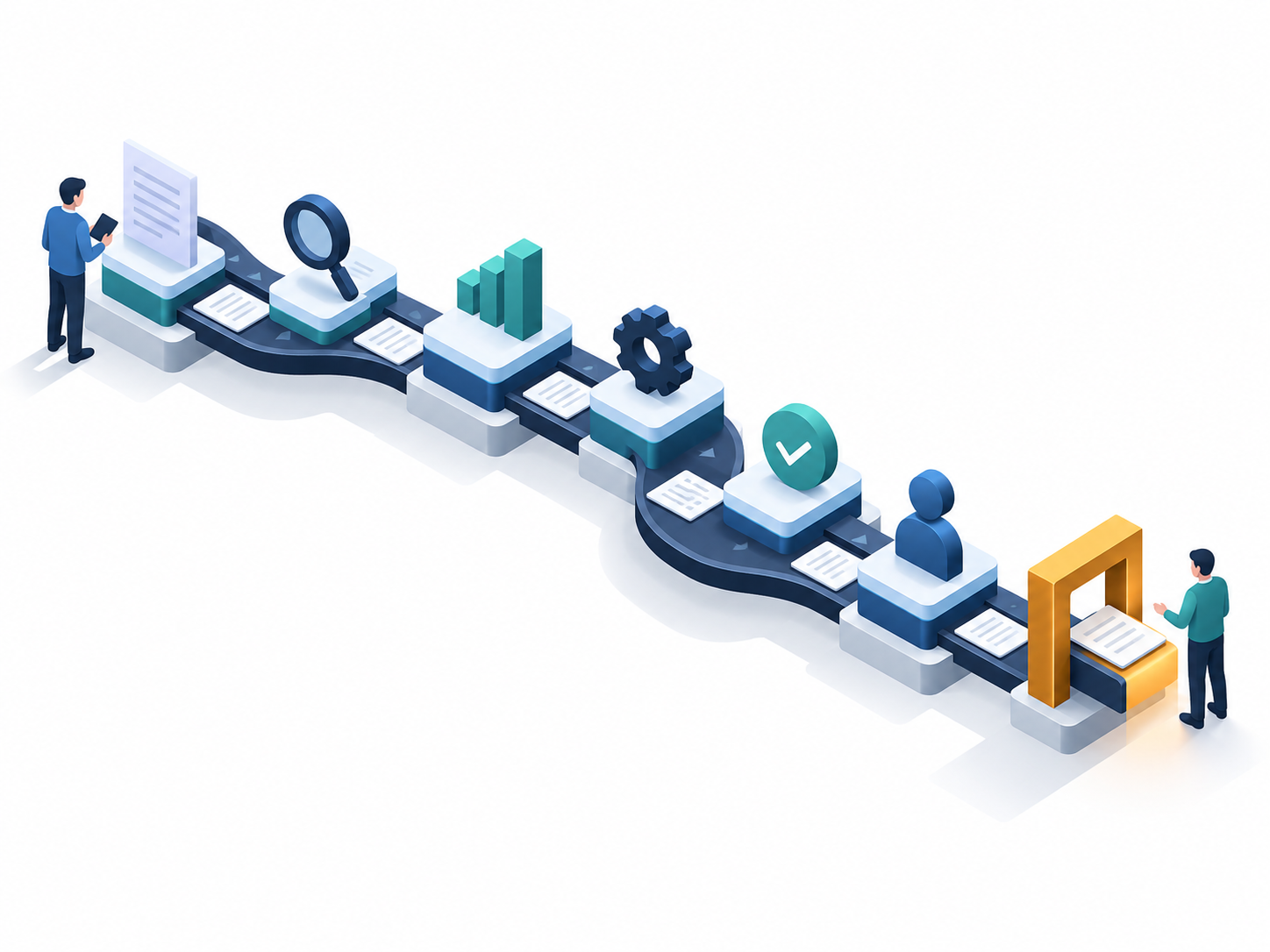
Enterprise change management exists to make a change without unintentionally breaking something else, while preserving a record of what changed and who approved it. A typical change moves through these stages:
- Request. Record the business reason, expected outcome and deadline.
- Impact analysis. Identify affected modules, integrations, data, reports and downstream processes.
- Estimate and prioritize. Assess effort, risk and timing against other work.
- Build and review. Implement the change and have it reviewed.
- Test. Run targeted tests and appropriate regression tests, and have business users confirm the outcome where needed.
- Approve and release. Obtain the required authorization, deploy through the right environment and retain a rollback path.
- Document. Record what changed, why it changed and how the release was validated.
Every stage depends on being able to understand the system well enough to predict the effect of a change. That understanding must be preserved even when the original developers are no longer available.
Where AI Generated Systems Can Become Difficult to Maintain
AI generated systems become difficult to maintain when their structure, dependencies and intended behavior are not clear to the team that owns them. The same weaknesses can affect any software, but fast generation makes them easier to create at scale.
Impact Analysis Without Clear System Knowledge
Impact analysis becomes harder when engineers must reconstruct the logic of a generated application before they can estimate a change. That adds uncertainty to planning and can delay apparently small updates.
This is not inevitable with AI generated code. Clear architecture, useful documentation, ownership, tests and traceable changes matter regardless of how the code was produced.
Change Requests Keep Arriving
Change requests are the steady stream of new requirements every enterprise system receives after launch. Tax rules change, approval thresholds move, new fields are added and integrations evolve.
Generating a fresh version for every change can create another large artifact to review and support. A better approach is to identify the smallest safe unit of change, understand its dependencies, and test the resulting behavior.
That does not mean every change should be limited to one file, prompt or workflow step. A seemingly local change can affect downstream steps, shared data or external systems, so the architecture must make those relationships visible.
Defects Still Need to Be Understood
Defects in generated code still need to be understood before they can be fixed. In my experience, people fixing defects in code they did not author can spend substantial time understanding its logic, sometimes a significant share of the total effort.
Regression risk also remains. A change can affect behavior beyond the immediate component, especially when dependencies or side effects are poorly documented. Testing should therefore be proportionate to the change and its potential impact, not restricted to the part that was edited.
This connects to the wider challenge of moving agentic AI beyond experiments. In a June 25, 2025 press release, Gartner predicted that more than 40% of agentic AI projects would be canceled by the end of 2027 because of escalating costs, unclear business value or inadequate risk controls.
That prediction covers agentic AI projects broadly, not generated code maintenance specifically. It reinforces the need to define business value and operational controls before scaling.
Why Uncontrolled Automatic Correction Is Not the Answer
Automatic correction is the practice of letting AI diagnose and repair defects on its own. AI assisted diagnosis and code repair can be useful, but the risk increases when a system can alter production behavior or deploy a change without appropriate validation and authorization.
For enterprise systems, production changes should pass the controls appropriate to their risk: tests, review, approval, deployment safeguards, monitoring and a rollback path. Some low risk actions may be automated, but autonomy should be bounded by explicit permissions and operational evidence.
What a Maintainable Enterprise AI Architecture Needs
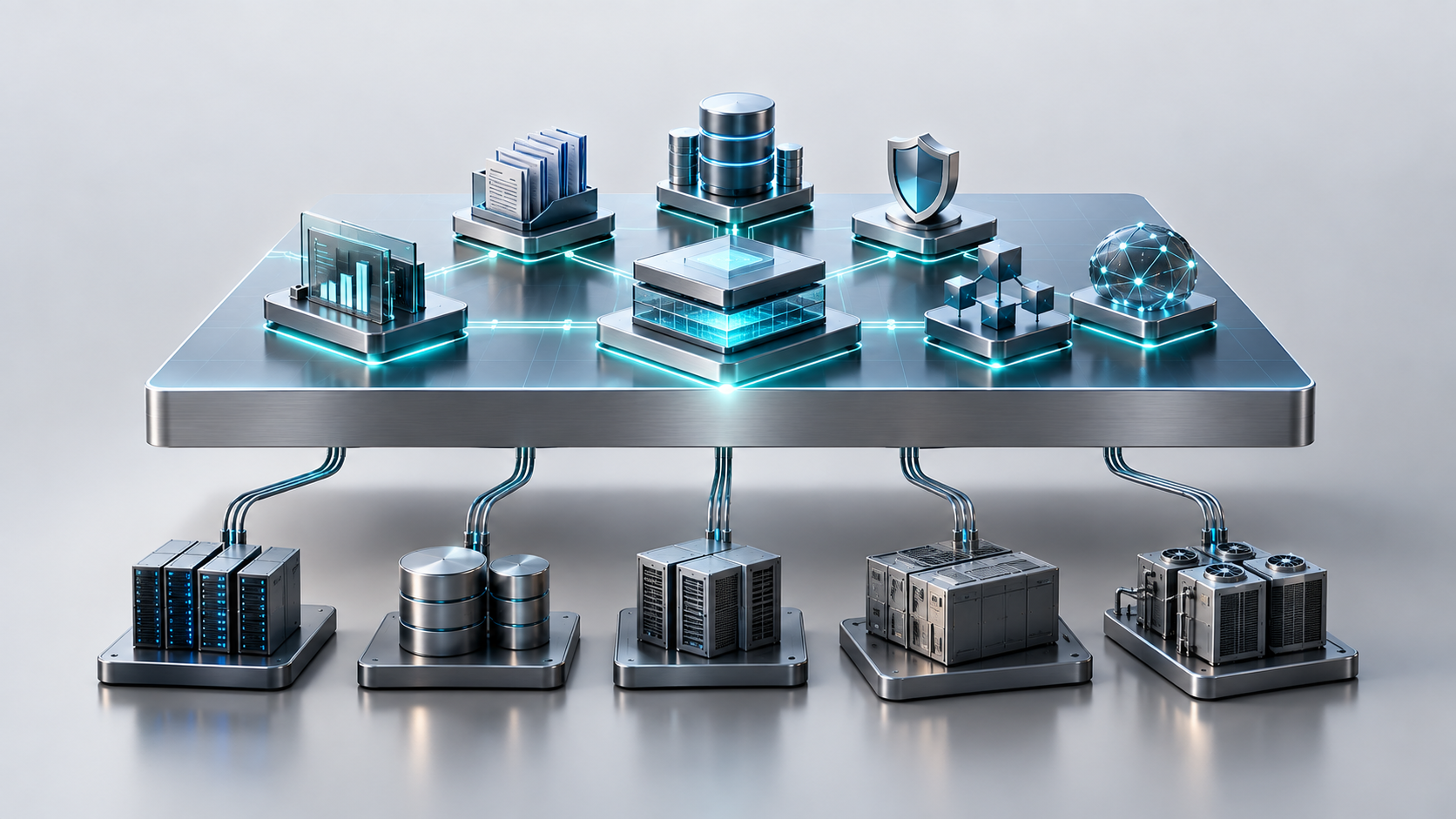
A maintainable enterprise AI architecture retains the speed of AI while making solutions understandable, testable and governable after release. The objective is not to avoid code generation, and six architectural practices help.
1. Modular, Step Based Flows
A step based flow separates a larger process into understandable units, each with a defined goal, inputs, outputs and permitted actions. Depending on the implementation, a step may be driven by instructions, configuration, code or a combination of them.
When a requirement changes, the team can identify the affected step or component and update it without rebuilding unrelated parts by default. This can reduce change scope, but only when dependencies and downstream effects are visible and tests confirm that the wider process still behaves correctly.
A practical change process should identify the affected step, check its contracts and dependencies, and run targeted tests plus relevant regression tests. It should then obtain the required approval and release through controlled environments.
2. Reuse Validated Assets
Reusing validated assets means building from proven workflow steps, agent definitions, tool configurations, API adapters, business rules, approved knowledge assets and test cases where they fit the new use case. Reuse should mean more than copying an agent prompt.
Reuse can reduce repeated implementation work, but it is not automatic proof of quality. Components need versioning, ownership, compatibility checks and tests.
Knowledge and documents need controls for access, freshness and relevance. Memory from prior executions should be reused only when its purpose, scope and data permissions are clear.
3. Coordinate Specialist Agents Around a Process
Coordinating specialist agents means organizing them around a defined process with explicit handoffs, responsibilities, failure handling and controls over what each one can do. Enterprise processes cross departments, systems and approval boundaries, so this structure matters.
An agent network is not simply a collection of agents. It is a process with observable state, controlled transitions and a clear path for exceptions.
The design should make it possible to identify which component acted, what information it used and why the next step was triggered.
4. Monitor Operations After Go Live
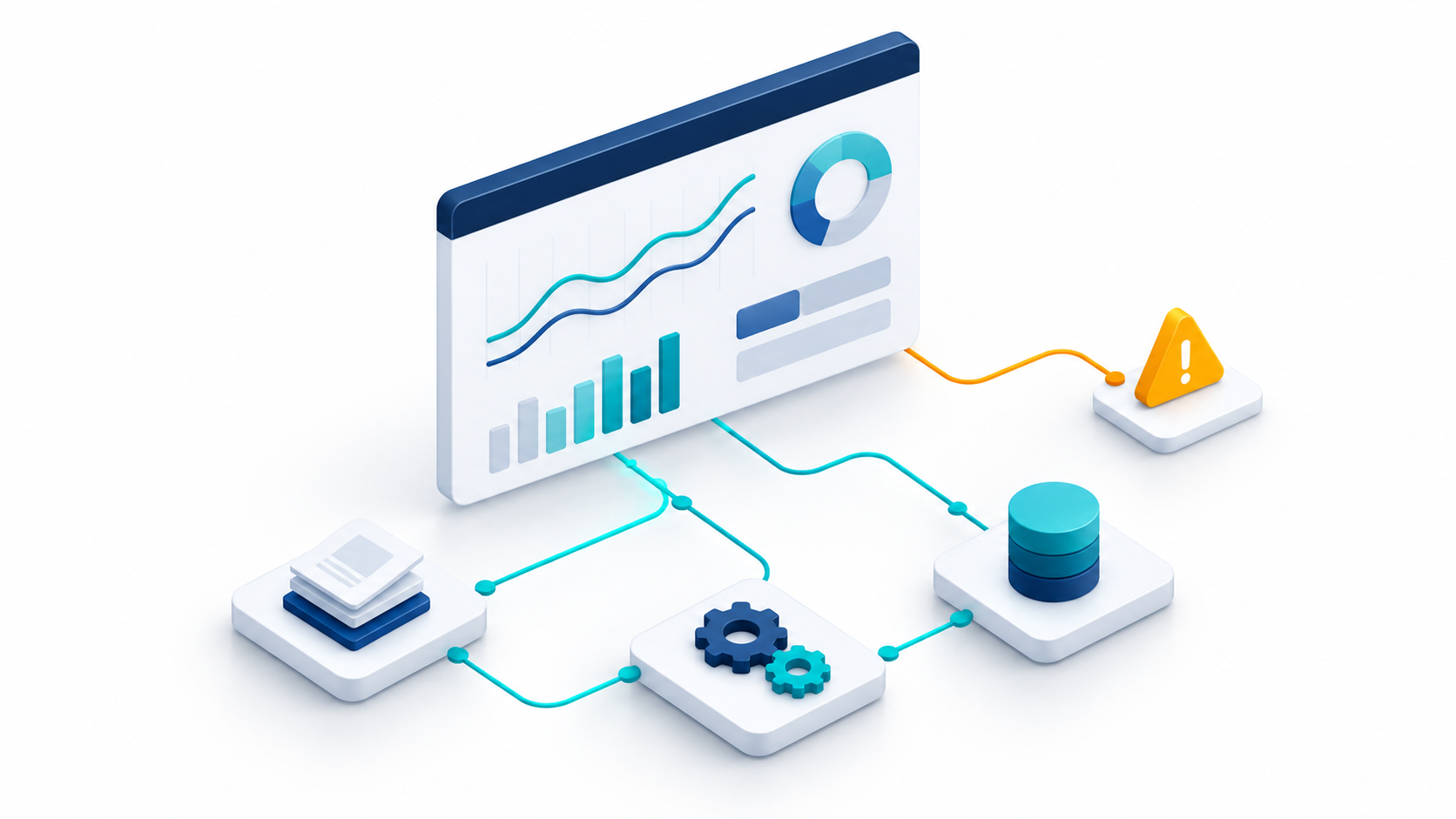
Operational monitoring helps teams see execution status, failures, alerts, approvals and escalations. Logs and audit trails help authorized people investigate what happened.
Dashboards and a virtual assistant can make operational information easier to access, but they do not replace reliable underlying records. The aim is to let operations teams answer routine questions and resolve known exceptions without sending every query to engineering.
When an issue requires engineering intervention, the evidence should make diagnosis faster.
5. Govern Identity, Permissions and Consequential Actions
Identity governance gives each agent or execution identity only the access it needs. Read and write permissions should be scoped to the relevant systems and actions, rather than inherited from a broad shared administrator identity. Credentials and authorization should make every action attributable and revocable.
Human approval should be required where the business risk calls for it, such as consequential financial, regulatory or customer facing actions. Approval rules should be explicit. As evidence accumulates, organizations can automate well understood, lower risk activities while retaining escalation paths and controls for high impact actions.
Corrections from people can be captured as explicit rules, workflow updates or evaluation cases. Those changes should be tested before they influence production behavior, because feedback does not automatically make an agent more reliable.
6. Treat Testing and Release as Part of the Architecture
Testing and release belong in the architecture because a maintainable system needs more than a prompt editor and a deployment button. Teams should be able to version changes, test changed steps, validate downstream dependencies and run automated regression tests where appropriate.
Releases should move through development, test, UAT and production environments, with approval, auditability and rollback built into the process. The exact controls should reflect the system's risk and the maturity of its tests.
The point is not to eliminate engineering judgment. It is to make change repeatable and reviewable.
Case Study: Government eVisa Programs
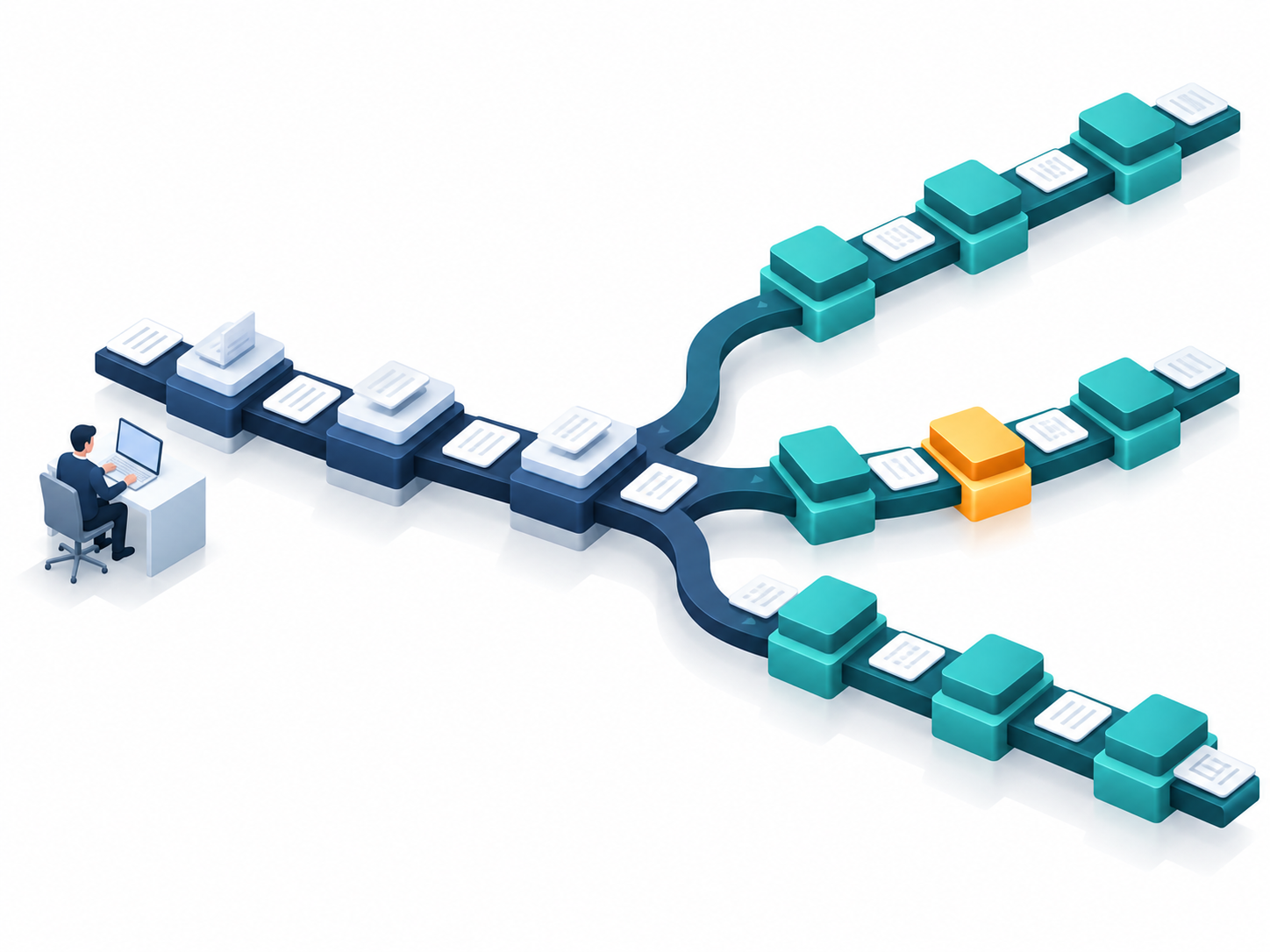
Government eVisa programs combine document processing, verification, changing policy requirements, multiple stakeholders and decisions that must remain with the appropriate authorities. They show clearly why reuse and clear process boundaries matter.
The Delivery Challenge
The delivery challenge in an eVisa program is coordinating many stages and stakeholders while the rules keep changing. A process may include application intake, document checks, verification, routing and approvals.
These stages can involve government departments, embassies and delivery partners, each with their own systems and decision rights. Visa categories, fees, eligibility criteria and document requirements can vary by country and change over time.
When a solution is structured into distinct stages, a country specific variation can be assessed against the relevant workflow, rules, integrations and downstream effects. The architecture should not assume a policy update is isolated simply because it appears to affect one step.
What Happened in This Delivery
In this delivery, we implemented a government eVisa program through a partner, with multiple stakeholders including embassies. The initial four week period covered part of the first implementation, not every aspect of the complete program.
We then replicated the model in other countries, with each rollout taking about one week in our experience. These timelines reflect reuse of platform components, and the six month comparison for a conventional build is our own estimate rather than a measured benchmark.
At the time of our podcast conversation, the system had been in production for six months with no reported issues.
The lesson is that reusable components help teams start from a proven base rather than a blank page. The value comes from reusing appropriate assets while validating each country's requirements, integrations, approvals and operating conditions.
How AIQoD Approaches This
AIQoD's Enterprise Intelligence Platform structures enterprise solutions as configurable, reusable flows rather than treating each new requirement as an isolated build. Depending on the solution, changes can involve instructions, workflow steps, generated code, integrations, reusable components, business rules or configuration.
The platform reuses workflow steps, integration adapters, agent and tool definitions, business rules and approved knowledge assets where they fit the use case. Reuse still needs versioning, dependency checks and testing, because a component that worked in one context should not be assumed safe in another.
AIQoD supports a controlled approach to testing and release, including separate development, test, UAT and production environments, automated regression tests where configured, versioning and rollback, and human approval before production release. The appropriate checks depend on the change and the risk of the process.
For operations, AIQoD brings together execution status, failures, logs and audit trails, alerts, dashboards, approvals, escalations and a virtual assistant for operational questions. Agent level identity and access controls define what each agent is permitted to read or change.
These controls make activity easier to monitor and investigate without removing the need for oversight. The broader principle is simple: generate and configure quickly, but retain the ability to understand, test, authorize and operate what has been deployed.
Conclusion
Maintaining AI generated code in the enterprise depends on far more than code generation speed. It depends on whether teams can understand the solution, isolate changes safely, reuse validated assets, test downstream behavior and maintain control after deployment.
A modular architecture can make that work easier, but no design pattern removes the need for engineering discipline. Reuse must be validated, changes must be tested, access must be controlled and consequential actions must remain accountable.
That is the standard enterprise AI should meet: a system people can continue to change and operate with confidence, not just a successful demo.
Frequently Asked Questions
Why can AI generated code be hard to maintain in an enterprise?
It becomes difficult when architecture, dependencies, tests, documentation and ownership are unclear. The same problems can affect human written code, so the generation method alone does not determine maintainability.
How do step based flows help with change requests?
They make a process easier to understand and change by separating it into defined units. Teams still need to validate dependencies and run appropriate regression tests, because a local change can affect downstream behavior.
Can AI agents fix their own defects in production?
AI can help diagnose and propose fixes, but production changes should pass appropriate testing, authorization, monitoring and rollback controls. Unreviewed self modification is not a safe default for enterprise systems.
How should enterprises control what AI agents can access?
Use explicit, least privilege permissions for each agent and system, with attributable identities, auditable actions and the ability to revoke access. Both read and write permissions should be scoped.
Does reusing agents or memory automatically improve results?
No, reuse reduces repeated work only when assets are appropriate and validated. Memory and knowledge need access, relevance and freshness controls and should not be assumed to improve behavior automatically.